Self Drive
Self Drive Convoy Guide: Rules, Spacing and Communication
A convoy is not a queue of cars. It is a system with roles, spacing rules and signals — and it is what makes remote routes safe to drive in your own vehicle.
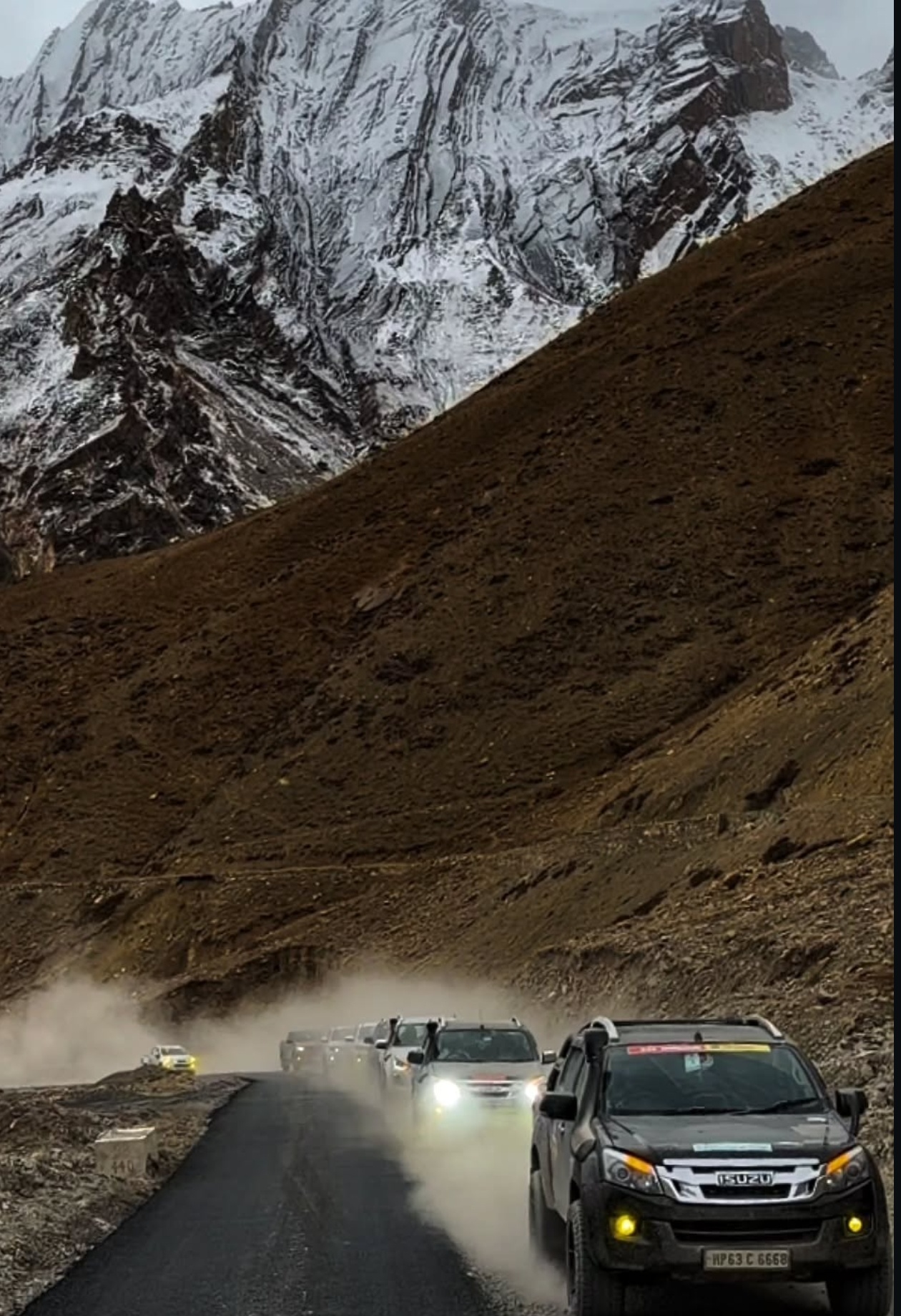
Self drive on a supported expedition means your vehicle, our structure. Between the lead and the sweep, the convoy carries route knowledge, recovery gear, spares and the judgement calls that keep a group moving in country with no phone signal.
Roles in the convoy
- Lead: sets pace, reads the road, calls stops and crossings.
- Sweep: last vehicle, carries recovery gear and never overtakes a guest.
- Guest vehicles: hold position between lead and sweep, no reordering mid-leg.
- Support: fuel, spares and the medical kit travel distributed across the convoy.
The rules that matter
- 01Keep the vehicle behind you in your mirror. If it disappears, slow down or stop.
- 02Never overtake within the convoy without a call from the lead.
- 03Headlights on, always. Visibility in dust and glare is worse than it feels.
- 04One vehicle at a time on water crossings, rock steps and single-lane ledges.
- 05Uphill traffic has right of way on mountain roads. Always.
Spacing
| Terrain | Spacing | Why |
|---|---|---|
| Tarmac | 3–4 seconds | Normal braking distance plus altitude reaction lag |
| Dust or gravel | 8–10 seconds | You cannot see through another vehicle's dust |
| Snow or ice | 10+ seconds | Braking distances triple |
| Water crossing | One at a time | The next vehicle is the recovery vehicle |
Communication
We run VHF radios where permitted and fall back on agreed hand signals everywhere else: open palm out for stop, arm rotating for start engines, thumb down for a mechanical problem, headlights flashed twice for 'losing sight of you'. Every morning briefing confirms the signal set and the day's rally point.
The convoy moves at the speed of its slowest vehicle. That is the point, not the problem.
Recovery etiquette
If you are stuck, stop trying. Digging in a vehicle takes seconds and adds an hour to the recovery. Wait for the sweep, keep bystanders out of the strap's arc, and use rated recovery points only. Anything less is how people get hurt.
Not sure your vehicle is ready? Work through the 4×4 vehicle preparation guide at least two weeks before departure.
Downloads
Frequently asked
- What vehicle do I need for a self drive expedition?
- Genuine four-wheel drive with low range, adequate ground clearance, all-terrain tyres with good tread, and a full service within a month of departure.
- Do you provide radios for self drive vehicles?
- We run VHF radios in the lead and sweep vehicles and issue handsets where regulations allow. Where they do not, the convoy runs on an agreed hand-signal set confirmed at the morning briefing.
- What if my vehicle breaks down mid-route?
- The sweep vehicle carries recovery gear and common spares, and our crew handles roadside troubleshooting. Major repairs are arranged at the nearest workshop with costs borne by the owner.
- Can I leave the convoy and drive ahead?
- No. Convoy integrity is what makes remote routes safe. Detours and side trips are planned at the morning briefing so the whole group knows the plan.
Ride with us
Bring your own machine
Every Hello Himalayas expedition runs a self drive format with lead and sweep vehicles, briefings and recovery support.
Browse expeditionsWritten by
Hello Himalayas Expedition Desk
Route planning & operations, Rohru
Our route planners have run these roads every season since 2015, from Rohru into Spiti, Zanskar and eastern Ladakh. Everything here comes out of the logbook.