Trip Planning
Self Drive or Seat in SUV: Which Expedition Format Suits You
Every Hello Himalayas expedition runs in two formats. The difference is not just price — it changes how the days feel, how tired you are, and how much of the road you actually see.
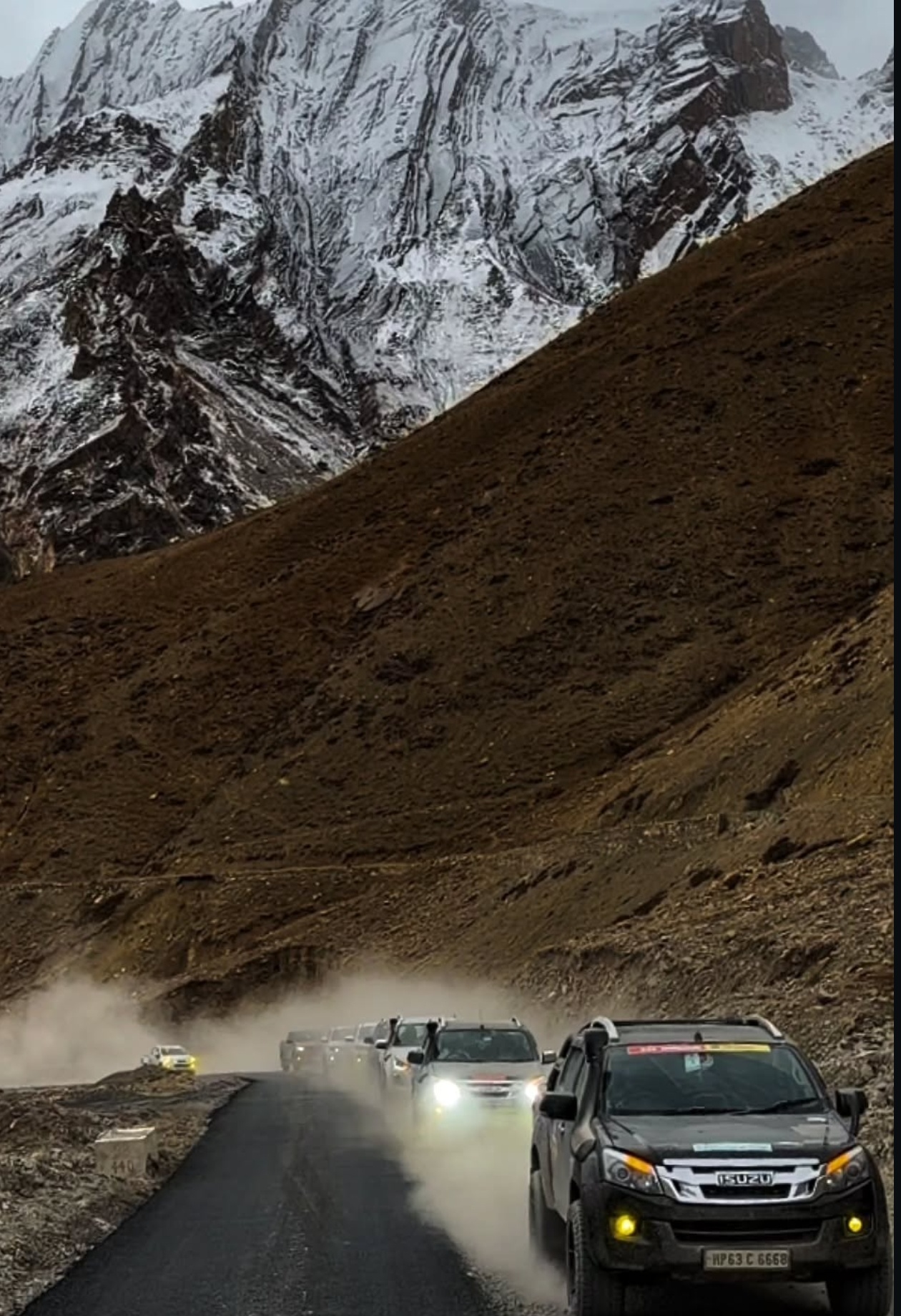
Self drive means you bring your own vehicle and run it inside our convoy, with our lead and sweep vehicles, route briefings and recovery support. Seat in SUV means you join one of our expedition vehicles — three guests per SUV — with an experienced driver at the wheel.
The honest comparison
| Self Drive | Seat in SUV | |
|---|---|---|
| You bring | Your own 4x4 | Nothing but a bag |
| Driving load | 6–8 hours on hard days | None |
| Cost | Lower package price, your fuel and wear | Higher package price, all-inclusive |
| Best for | Owners who want their machine on the pass | First-timers and solo travellers |
| Risk | Your vehicle, your repairs | Ours |
Choose self drive if…
- You own a capable 4x4 and have driven mountain roads before.
- You want to control your own pace within the convoy.
- You are travelling as a couple or family and want your own space each day.
- The driving itself is the point of the trip for you.
Choose seat in SUV if…
- This is your first time above 4,000m.
- You are travelling solo and want the group experience.
- You would rather look out of the window than at the road.
- You do not want to put your own vehicle through river crossings and rock steps.
Nobody regrets a seat in the SUV on day nine of a Trans Himalayan run.
What stays the same
Both formats share the same route, the same convoy, the same briefings and the same accommodation tier you book. Seat-in-SUV guests ride three to a vehicle, and vehicle allocation across the fleet includes Isuzu, Toyota Fortuner, Mahindra Scorpio, Mahindra Thar and Toyota Hilux depending on the route and group size.
A note on vehicle eligibility
For self drive we ask for a four-wheel-drive vehicle with adequate ground clearance, healthy tyres and a recent service. On routes like the Trans Himalayan Expedition and Explore Zanskar, low range genuinely gets used — this is not a formality.
Frequently asked
- How many people share a seat-in-SUV vehicle?
- Three guests per SUV plus the driver, so everyone gets a window and there is room for camera gear and day bags inside the cabin.
- Can I self drive a 2WD SUV on your expeditions?
- On lower routes it is sometimes possible, but for Trans Himalayan, Zanskar and Chumathang we require genuine four-wheel drive with good ground clearance and all-terrain tyres.
- What happens if my vehicle breaks down on a self drive trip?
- Our sweep vehicle carries recovery gear and basic spares, and our crew handles on-road troubleshooting. Major repairs are arranged at the nearest workshop, with costs borne by the vehicle owner.
Written by
Hello Himalayas Expedition Desk
Route planning & operations, Rohru
The crew that scouts, drives and runs every Hello Himalayas convoy across Spiti, Ladakh and Zanskar. Everything here comes from seasons spent on the road, not from a desk.